
The 3-Step Author Transformation Framework: How to Turn Mind Maps into Finished Manuscripts
- Maneesh Dutt
- Uncategorized
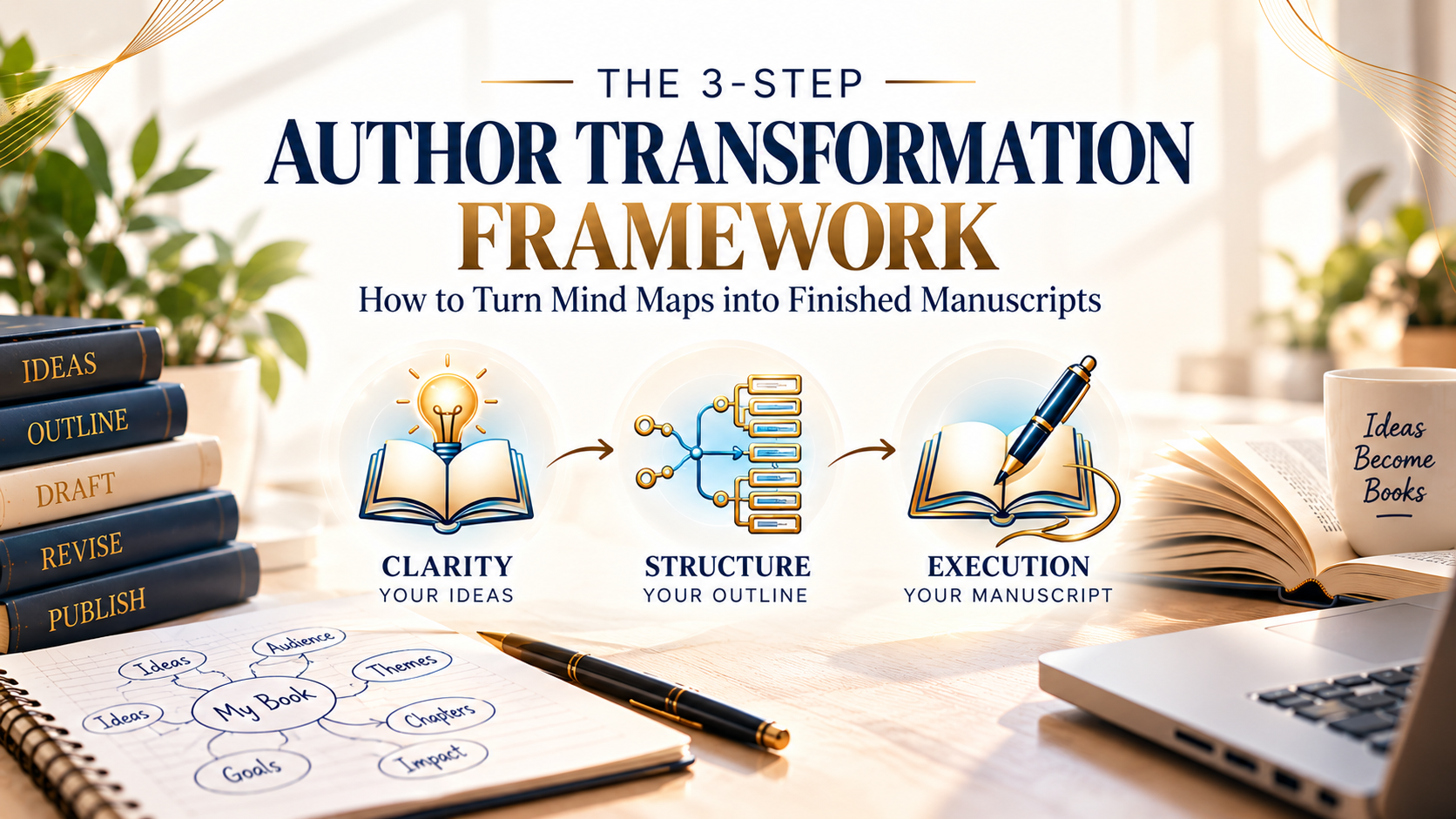
In my last post, I told you about the 68 words that turned into a 4,861-word published article, and how that discovery changed the way I write forever. However, one published article doesn’t make a system. It took years of repeating that process, book after book, before the pattern became clear enough to teach.
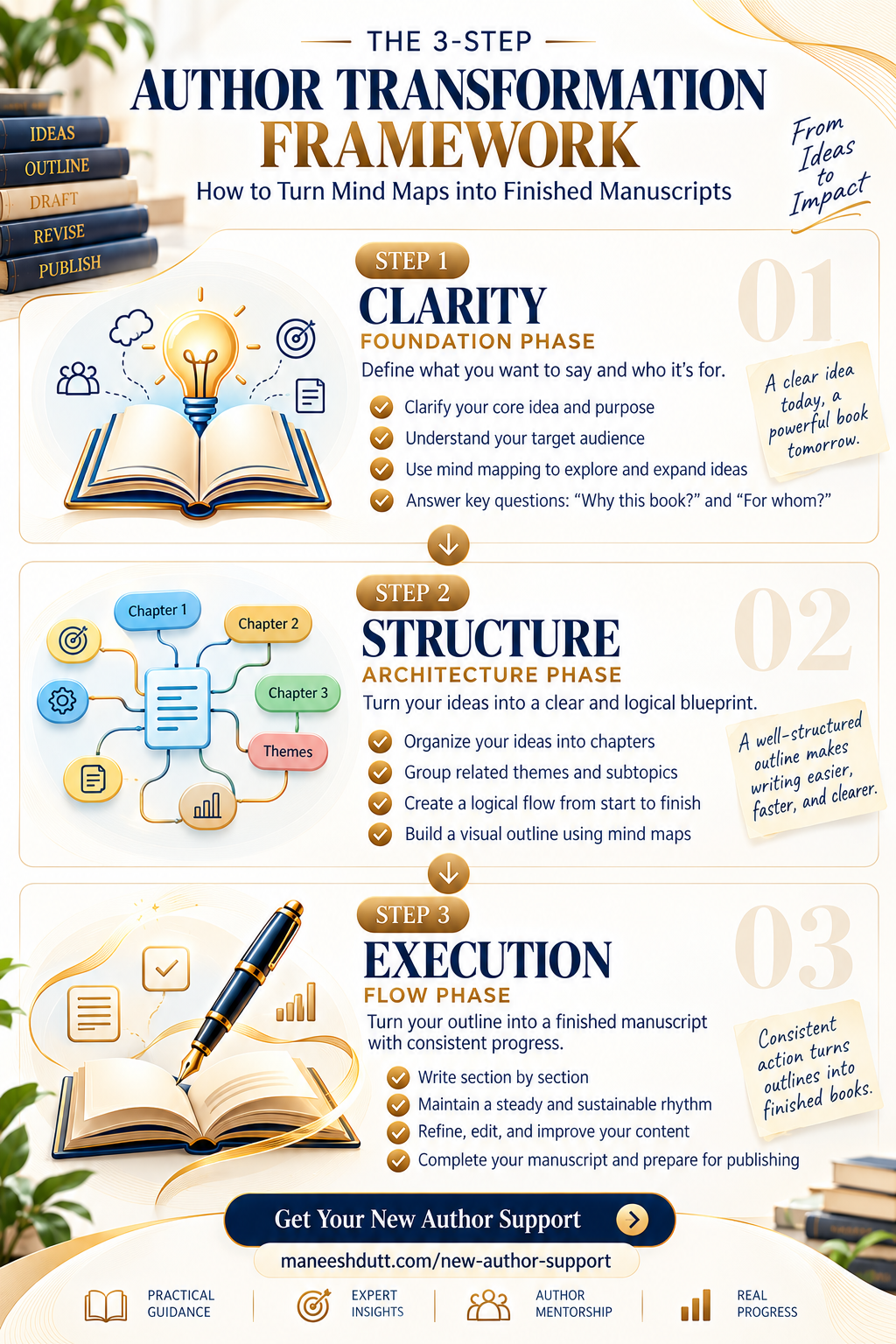
That system is what I now call the 3-Step Author Transformation Framework, a practical answer for anyone wondering how to begin writing a book without getting lost along the way. Whether I’m writing an article or an entire book, these three steps are the backbone of every manuscript I write, and every author I coach. And of course they are based on the powerful Mind Mapping technique.
So, if you are a coach or a thought leader stuck with a book idea in your mind, a student struggling with your thesis, a homemaker working on your first book, an aspiring technical writer, or anybody wanting to pen your first book, you can benefit from my 3-Step Author Transformation Framework. This is especially true if you’re approaching writing a book for beginners for the very first time and aren’t sure where to start.
Step 1: Clarity – The Foundation Phase
Before I write a single sentence, I answer some core questions using a Mind Map: Why am I writing this book? Who is this for? What would be a possible outline? etc.
Skipping this step is one of the fastest ways for an author to lose motivation and for the manuscript to lose its direction. When these fundamentals are unclear, every decision that follows becomes harder. You second-guess chapters, follow unnecessary tangents, and lose momentum just when the work needs it most. But when the idea is clear, the clarity keeps the manuscript focused, purposeful, and moving forward.
Step 2: Structure – The Manuscript Architecture Phase
The clarity achieved from step 1 now becomes the motivational fuel for me to build the book outline. At this stage, the goal is not to organize everything perfectly on the first pass but to build a top-level structure for your writing project. See what belongs where and how the ideas relate.
This process often reveals more than most authors expect. Gaps in the argument become visible, redundant ideas cluster together, and themes I never consciously planned begin to surface and repeat.
By the time the map feels complete, I am looking at a full-blown architecture of the manuscript: how the sections connect, how one idea leads naturally to the next, and where the story or argument needs more depth. And all this even before writing the first sentence of the book!
Step 3: Execution – The Flow Phase
This is where the payoff begins. Once the chapter maps are built using the architecture unraveled in step 2, writing stops feeling like a fight with a blank page and becomes closer to following a trail that has already been marked. I no longer must figure out what comes next. I simply nurture the idea in front of me.
I choose one branch and expand it into prose. While I am working on it, nothing else needs my attention. I am not worrying about Chapter Nine, wondering whether I have covered everything, or trying to hold the entire book in my head.
That narrow focus is what makes the process sustainable. Writing a book stops feeling like one enormous task and becomes a series of small, achievable ones. Eventually, the book takes shape through a steady rhythm of small, finished pieces, proof that even writing a book for beginners can feel manageable when broken into the right steps.
Why This Works
Moving from rigid outlines to visual mind mapping did more than make me a faster writer. It changed my entire relationship with the writing process, from a stressful exercise in willpower to a fluid, focused habit I genuinely looked forward to.
This framework has carried me through all eight of my books, and it is the same process I now use to help other authors move from stuck to finished, whether they’re deep into a manuscript or still working out how to begin writing a book in the first place.
Explore my 3-Step Author Transformation Framework: maneeshdutt.com/new-author-support
But there’s a question that comes before all of this: why do so many aspiring authors struggle to even begin with their writing ideas? In the next post, I’ll explore what really holds authors-to-be back, and why getting started is often less about finding the perfect idea and more about knowing what to do with the one you already have.
Frequently Asked Questions
How do I begin writing a book if I don’t know where to start?
Start with clarity before structure. Use a mind map to answer three core questions: why you’re writing the book, who it’s for, and what a possible outline could look like, before writing a single sentence. This foundation makes every decision afterward easier, from choosing chapters to staying motivated.
Is writing a book for beginners really achievable without formal training?
Yes. The 3-Step Author Transformation Framework was built specifically for people without a writing background: coaches, students, homemakers, and first-time authors. Because it breaks the process into clarity, structure, and execution, beginners can move from a rough idea to a finished manuscript one small, achievable step at a time, rather than facing the whole book at once.